Saturday, November 27, 2021

What is Botrytis cinerea?

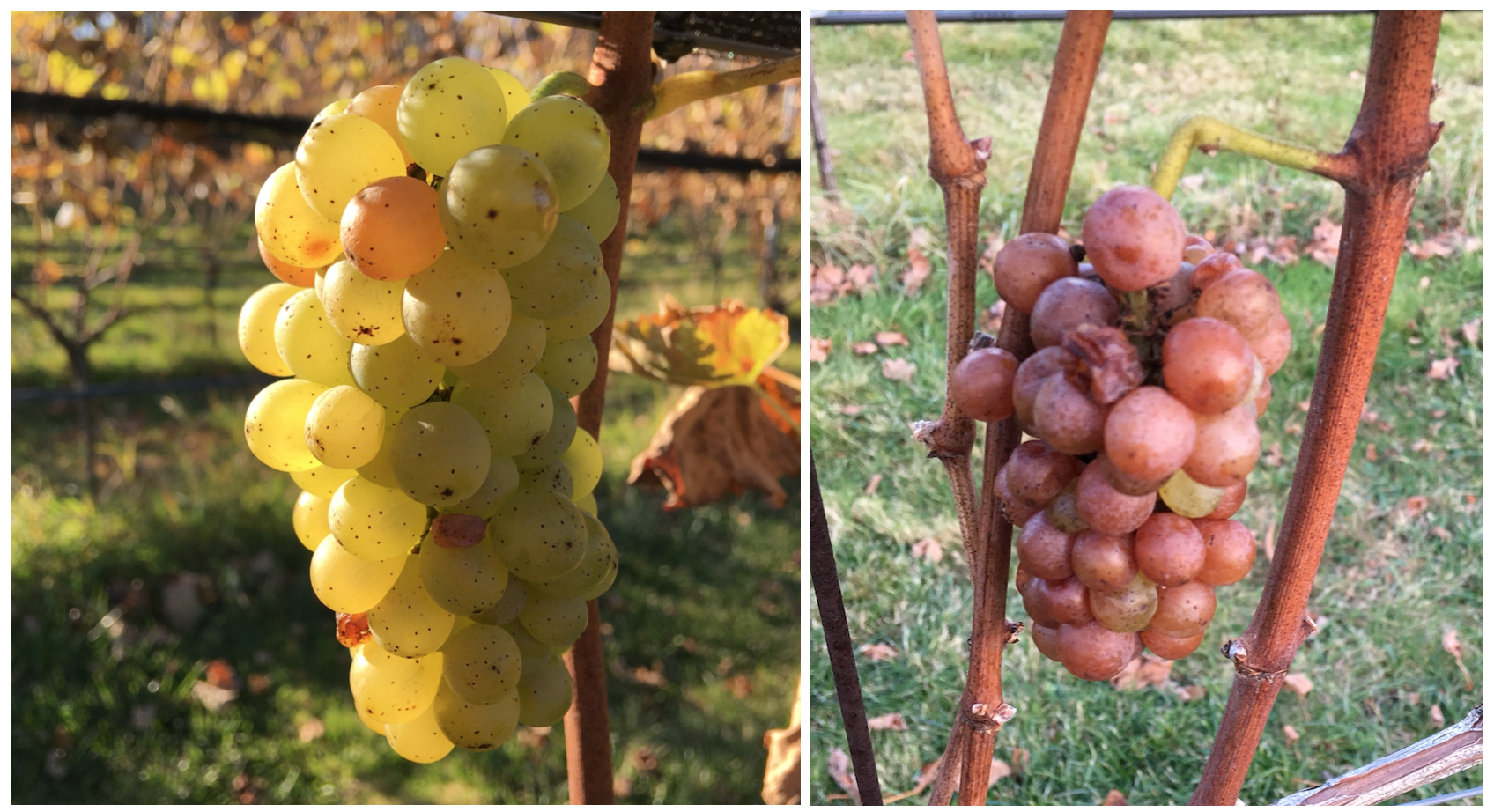
What is in a name? Botrytis cinerea is ignoble rot when it infects grapes resulting in bunch rot and grey mold, but under the right conditions, Botrytis cinerea can develop into noble rot capable of producing wines of immense sugar concentration. So what is Botrytis cinerea?1,2
  • Botrytis cinerea is a fungus
  • The initial inoculum probably develops from overwintering mycelia which are strands of the living fungus that can survive on previously diseased tissues or from resting structures called sclerotia
  • Grapevine flowers, immediately after capfall, and berries post veraison are particularly susceptible to botrytis infection.
  • Infected flower parts located in the developing cluster may initiate fruit infection later during the season
  • As the fruit reaches maturity, resistance to fungal growth declines and under moist conditions, new infections, incited by spores from external sources become important
  • Botrytis relies on damaged tissue to begin an infection so any wounded green tissue is susceptible
  • Grape varieties that produce thin-skinned, tightly packed bunches are prone to splitting and retain moisture, providing conditions that suit botrytis
  • Botrytis susceptible varieties include Chardonnay, Chenin Blanc, Grenache, Muller Thurgau, Pinot Gris, Pinot Noir, Riesling, Sauvignon Blanc, Semillon, Traminer, and Sultana
Here is the lifecycle of Botrytis cinerea:1
What are the conditions that can lead to noble rot?2
  • Noble rot develops late in the season under conditions of fluctuating humidity, specifically humid nights followed by dry, sunny days which limits fungal growth
  • Fall infection of Botrytis leads to the release of pectolytic enzymes that degrade the pectinaceous component of the cell wall leading to the dehydration of the grape under dry conditions
  • This drying of the berry is crucial to the concentration of the juice
  • Drying also limits secondary infection by bacteria and fungi including Penicillium, Aspergillus, and Mucor
  • A distinctive feature of noble rotting is a loss in varietal aroma due to the destruction of terpenes that give these varieties their distinctive fragrance.
So, Botrytis cinerea, ignoble during the growing season producing bunch rot and grey mold, but noble under certain rare conditions which produces a desirable transformation into a dehyrated, highly concentrated grape enhancing it's quality.
References:
1. AWRI, Viti-Notes, Botrytis, 2010.
2. Ronald Jackson, Wine Science Third Edition, Elsevier, 2008, pg. 520- .

Wednesday, November 24, 2021

The Story of Our Wedding Bag Grapes

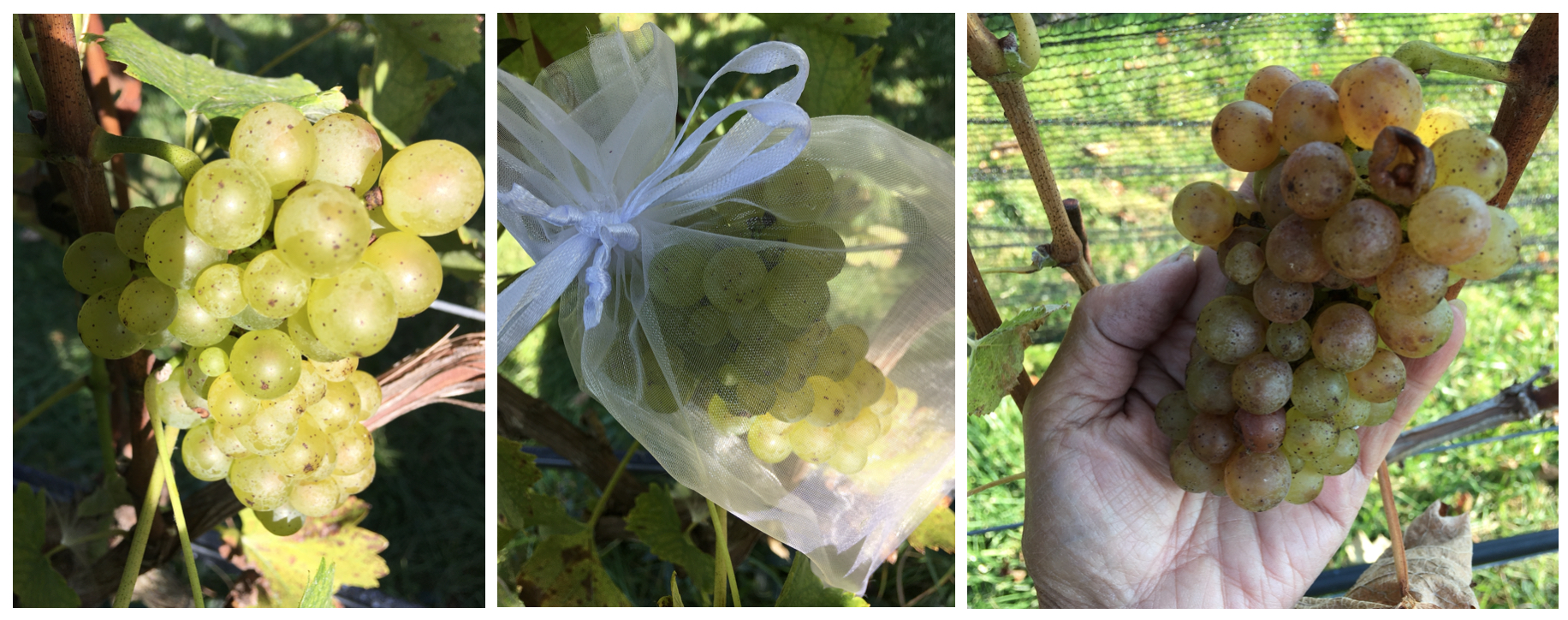
No matter how careful our harvesters are, there will always be some grapes that are left in the vineyard. We take advantage of this oversight, by putting wedding bags on these grapes. We think that the wedding bags are the key to getting the grapes to dehydrate and concentrate their sugars while providing safety from being the target of predators still looking for a sugar high.
As the leaves from the vines begin to fall, we are finding more grapes to bag. In the photo below, the bunch on the left was a bunch we found on November 10 and the bunch on the right was a bunch we found on November 21.
We have been making a late harvest Chenin Blanc since 2019 when we harvested the wedding bags on November 19, 2019. In 2020, we were not able to get to the wedding bags until December 11. Here is a photo of what the grapes looked like:
The 2020 late harvest Chenin Blanc yielded precious little liquid, but we did manage to ferment it and called the wine our version of The Most Expensive Wine, a Tokaji Essencia.
This year, we are carefully monitoring the transition of Chenin Blanc grape to botrytized raisin so that we don't go too far on the spectrum to raisin. Yesterday, while we were working in the vineyard, we gathered a few grapes and took the Brix measurement. Here is what we found:

Sunday, November 21, 2021

2018 Braida Monte Bruna Barbera d'Asti

We are always on the lookout to try different Barbera wines because we also grow Barbera. Recently, my husband bought this 2018 Braida Monte Bruna. We liked it immediately. The wine was dark garnet in color and had notes of blackberries and boysenberries at the beginning which lingered until the finish of acidity at the back end.
I learned a little more about this Barbera at the Braida Website. Montebruna is a Barbera d’Asti DOCG made with 100% Barbera grapes grown in an estate-owned vineyard in Rochetta Tanaro. The must spends two weeks in temperature-controlled steel tanks where it ferments and is then transferred to large oak barrels to age for a year. My husband said he purchased this wine for about $32.00. Worth it!

Friday, November 19, 2021

Statistics for Our Varieties from 2019-2021

Since 2019, we have been taking our harvest to Jonathan Edwards Winery where Jon and his crew help us to press the grapes and turn the juice into wine. I thought that it would be interesting to compare the harvest date, weight, volume, Brix, and TA of the varieites that we grow in the vineyard. We also grow Barbera, but that variety is still maturing and we are making this wine in our basement.
Auxerrois
Auxerrois Harvest Date Weight/
Lbs
Volume
of Juice/
Gallons
Brix pH TA
2019 September 23, 2019 636 50 19.6 3.23 7.35 g/L
2020 September 27, 2020 1670 133 19 3.07 7.5 g/L
2021 September 28, 2021 1638 130 18 3.25 7.2 g/L
Chenin Blanc
Chenin Blanc Harvest Date Weight/
Lbs
Volume
of Juice/
Gallons
Brix pH TA
2019 October 14, 2019 3920 305 21.6 3.15 13.5 g/L
2020 October 11, 2020 8201 655 23.3 3.09 12.1 g/L
2021 October 17-18, 2021 6200 496 20.4 3.17 14.6 g/L
Chardonnay
Chardonnay Harvest Date Weight/
Lbs
Volume
of Juice/
Gallons
Brix pH TA
2019 September 28, 2019 291 26 21.5 3.17 9.4 g/L
2020 September 24, 2020 1136 80 23.5 3.0 10 g/L
2021 October 3, 2020 2625 210 20.4 3.28 8.2 g/L
Cabernet Sauvignon
Cabernet
Sauvignon
Harvest Date Weight/
Lbs
Volume
of Juice/
Gallons
Brix pH TA
2019 November 3, 2019 332 30 19 3.25 11.1 g/L
2020 October 22, 2020 888 80 22.4 3.08 10.7 g/L
2021 October 24, 2021 561 45 20.1 3.07 10.4 g/L
Cabernet Franc
Cabernet
Franc
Harvest Date Weight/
Lbs
Volume
of Juice/
Gallons
Brix pH TA
2019 October 26, 2019 377 32 23 3.23 11.3 g/L
2020 October 22, 2020 872 80 23.3 3.27 11.3 g/L
2021 October 24, 2021 402 32 19.8 3.2 7.4 g/L
It's interesting to see if there are any trends developing. One thing that is clear is that 2020 was an outstanding year for ripening and it is reflected in the wines we made in 2020.